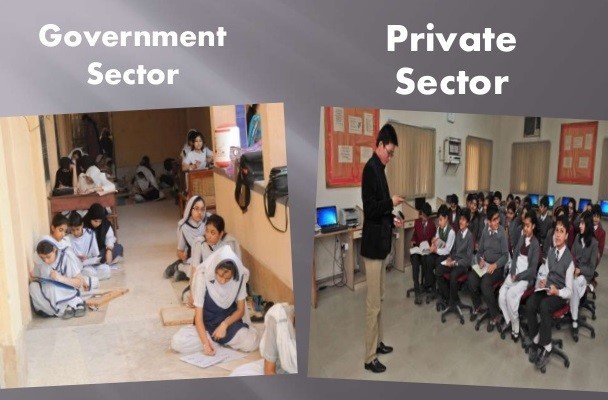
In a country where education should be a fundamental right, Pakistan’s school system reflects a deep divide—not just between rural and urban areas, but between public and private institutions. Both sectors are striving to educate millions of children, but the question remains: Which one is truly working for the future of Pakistan?
At Taleem Foundation, we work at the grassroots level to promote equitable education across underserved communities. Based on years of on-ground experience and national education data, we’re examining how both public and private schools are functioning—and what can be done to bridge the growing gap.
Understanding the Landscape
Pakistan’s education system is primarily divided into two sectors:
- Public (Government) Schools: Funded by the state, offering free or low-cost education.
- Private Schools: Run by individuals or organizations, charging fees ranging from modest to high-end elite schooling.
With over 22 million children still out of school (as per UNICEF), both systems are struggling to meet national education goals, albeit in different ways.
Public Education: Accessible but Underserved
Pros:
- Free or Minimal Cost: Public schools are the only option for low-income families.
- Nationwide Presence: Even in remote villages, a public school may be the only one available.
- Standardized Curriculum: Government schools follow national textbooks, ensuring consistency.
Challenges:
- Underfunding and Mismanagement: Many schools suffer from poor infrastructure, lack of clean water, and even missing boundary walls.
- Teacher Absenteeism: One of the biggest setbacks is the lack of accountability among staff.
- Limited Resources: Outdated teaching methods and insufficient learning materials often hinder student growth.
Taleem Foundation’s Approach: In districts like Kohlu, Zhob, and Dera Bugti, we’ve been transforming public schools by introducing smart classrooms, training teachers, and digitizing learning content to overcome these challenges.
Private Education: Better Quality, But Not for All
Pros:
- Better Infrastructure: Private schools typically offer cleaner, more equipped learning environments.
- Qualified Staff: Teachers in private institutions are often more accountable due to competitive hiring.
- Parental Satisfaction: Many parents feel private schools offer better English-medium instruction and exam preparation.
Challenges:
- Affordability: The quality comes at a price—often too steep for low- and even middle-income families.
- Inequality: High-end private schools reinforce social divisions rather than leveling them.
- Profit-Driven Models: Some schools prioritize revenue over educational impact.
The Taleem Foundation Perspective: While private schools serve many children well, they should not replace a robust public education system. We believe sustainable education reform must uplift public institutions—not leave them behind.
Which Is Really Working?
It’s not a simple competition—it’s a systemic imbalance. Private education may produce better short-term academic results for those who can afford it, but public education is the backbone of nationwide access.
The real question isn’t which sector is better—it’s how can we make education work for all?
Bridging the Gap: Taleem Foundation’s Vision
At Taleem Foundation, we believe the future lies in hybrid, inclusive models:
- Public-Private Partnerships: Collaborations that improve public school performance using private innovation.
- Community Engagement: Involving local stakeholders to ensure school attendance and monitor quality.
- Tech-Enabled Learning: Leveraging e-learning platforms and smart classrooms to provide 21st-century education in rural Pakistan.
We’ve already seen success in schools across Balochistan where digital literacy, gender parity, and academic performance have all improved under Taleem Foundation’s programs.
Conclusion: A Call to Action
Education isn’t a luxury—it’s a lifeline. Public and private systems must work together to create a fair, effective, and future-ready education system. Pakistan’s children deserve nothing less.
If you’re passionate about transforming education in Pakistan, partner with Taleem Foundation. Whether you’re a policymaker, parent, teacher, or donor—you have a role to play in shaping the next generation.