Educational inequality in Pakistan remains one of the most pressing challenges facing the nation today. Millions of children still lack access to quality education due to poverty gender disparity regional differences and limited infrastructure. Educational inequality in Pakistan affects not only individual futures but also the overall social and economic development of the country. At Taleem Foundation we believe that bridging this gap requires strong policies community involvement and sustainable educational initiatives.
Here is a closer look at the causes of educational inequality in Pakistan and the policies that can help close the gap.
Urban and Rural Education Divide
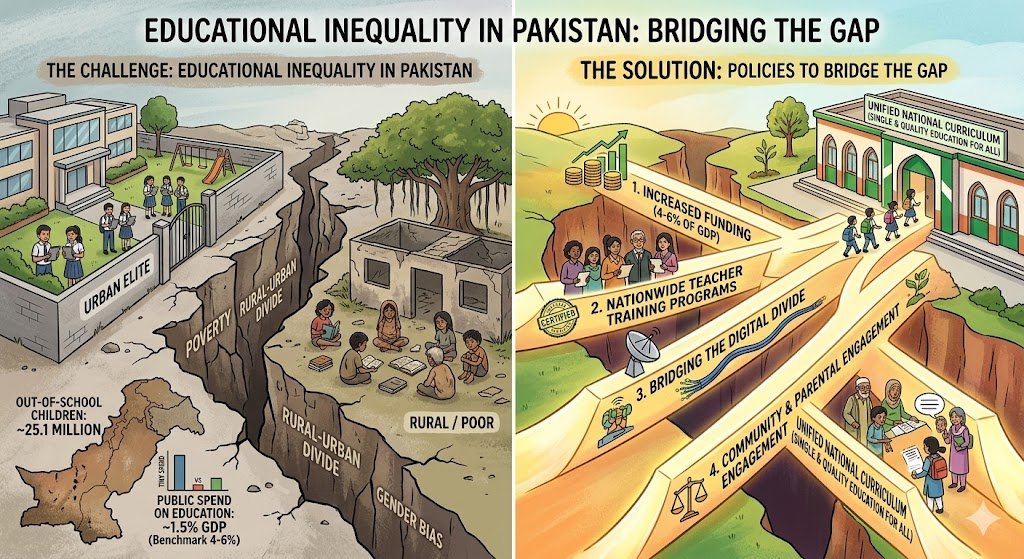
One of the biggest factors behind educational inequality in Pakistan is the difference between urban and rural areas. Major cities like Karachi Lahore and Islamabad have better schools trained teachers and modern facilities. In contrast many rural areas face shortages of classrooms learning materials and qualified staff. Policy reforms must prioritize rural school development and equitable resource distribution.
Gender Disparity in Education
Educational inequality in Pakistan is strongly linked to gender disparity. Many girls especially in underprivileged regions are unable to attend school due to cultural norms safety concerns and financial barriers. Policies that promote girls education provide stipends and ensure safe school environments can significantly improve enrollment and retention rates.
Poverty and Access Barriers
Poverty remains a central cause of educational inequality in Pakistan. Families struggling with daily expenses often prioritize work over schooling for their children. Government policies must expand conditional cash transfer programs school meal initiatives and free learning materials to reduce financial burdens on families.
Quality of Education
Access alone is not enough. Educational inequality in Pakistan also stems from inconsistent education quality. Teacher training curriculum reform and technology integration are essential to create equal learning opportunities across regions. Institutions such as Higher Education Commission play a vital role in setting academic standards and improving higher education quality nationwide.
Policy Implementation and Accountability
While policies may exist effective implementation remains a challenge. Educational inequality in Pakistan can only be reduced when transparency monitoring and accountability systems are strengthened. Collaboration between federal and provincial bodies including the Ministry of Federal Education and Professional Training is crucial for consistent progress.
The Role of Nonprofit Organizations
Nonprofit organizations are essential partners in addressing educational inequality in Pakistan. Through community schools teacher training and scholarship programs organizations like Taleem Foundation work to fill gaps left by limited public resources. Public private partnerships can accelerate progress and create long term impact.
Educational inequality in Pakistan is not just an educational issue but a social justice issue. When children are denied quality education the entire nation loses potential talent innovation and leadership. Sustainable policies increased funding inclusive planning and grassroots initiatives are key to bridging the gap.
At Taleem Foundation we remain committed to reducing educational inequality in Pakistan by supporting underprivileged communities empowering teachers and creating safe learning environments. With collective effort policy reform and community engagement a more equal and educated Pakistan is possible.