Educations should prepare students for life, not just help them pass exams. Education should cultivate curiosity and problem-solving skills and teach young people to comprehend the world surrounding them. Yet many classrooms in Pakistan still put more weight on memorizing textbooks, giving ready answers, and getting good exam results. This has been causing constant controversy between rote learning and critical thinking, bringing up many questions concerning the future of education in the country.
The debate about rote learning Pakistan education is not only about the choice of one educational approach from the other. It is about understanding what students need in order to be successful in the world where everything changes rapidly. While memorizing has its place in studying, overreliance on it may affect creativity, independent thinking, and comprehension. At Taleem Foundation, understanding the importance of meaningful education is crucial for creating a learning environment.
Analyzing the Difference Between Memorization and Understanding
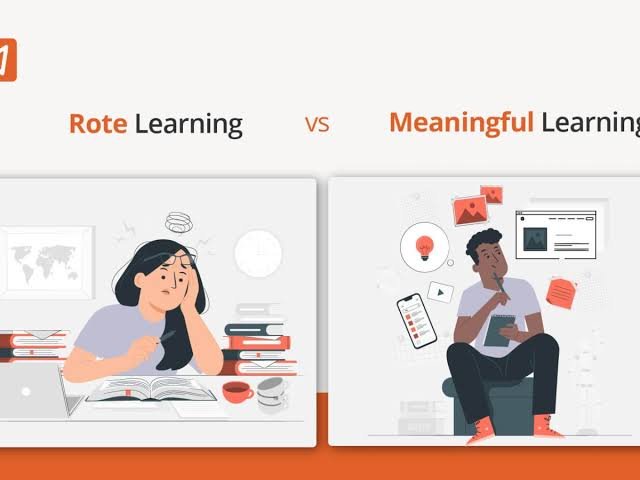
Rote learning is the process of memorizing information through repeated learning without gaining a deep understanding of the topic. In most cases, students are required to memorize textbook definitions, dates, formulas, and long answers. Their success is evaluated based on their ability to reproduce the information during exams.
Memorization has its uses in some cases. Mathematical formulas, scientific terminologies, historical dates, and vocabulary all require memorization. However, problems arise when memorization becomes the ultimate goal of education instead of being a component of it.
Critical thinking involves questioning information, exploring various viewpoints, making connections between concepts, and formulating conclusions of one’s own. Teachers do not simply ask their students for an answer but make them think of the reasons for a particular phenomenon and its practical application.
There is a big difference. A student can memorize a definition of a scientific term without comprehending the process itself. Another student can comprehend the concept so much that he or she will be able to formulate it in his or her own words and use it to solve another problem.
Reasons Why Memorization Is So Prevalent in Classrooms
There are several reasons why memorization still dominates Pakistani classrooms. One of them is the examination system in which students feel the need to cover large syllabuses and formulate answers according to marking schemes.
Memorization has its uses in some cases. Mathematical formulas, scientific terminologies, historical dates, and vocabulary all require memorization. However, problems arise when memorization becomes the ultimate goal of education instead of being a component of it.
Critical thinking involves questioning information, exploring various viewpoints, making connections between concepts, and formulating conclusions of one’s own. Teachers do not simply ask their students for an answer but make them think of the reasons for a particular phenomenon and its practical application.
There is a big difference. A student can memorize a definition of a scientific term without comprehending the process itself. Another student can comprehend the concept so much that he or she will be able to formulate it in his or her own words and use it to solve another problem.
Reasons Why Memorization Is So Common in Pakistani Classrooms
There are several reasons why memorization still dominates Pakistani classrooms. One of them is the examination system in which students feel the need to cover large syllabuses and formulate answers according to marking schemes.
In many learning environments, success is often measured by examination scores. In this case, a student might think about memorizing textbook contents as the best method to get better results since he/she thinks repeating known answers is always safe. Not enough time will be allocated for discussions, research work, experiments, and other creative activities.
Larger classes and few resources in the classroom will also influence the possibilities for an interactive process. It will be much simpler for teachers working with large groups of students to use traditional lecture methods than to organize tasks which require individual participation from students.
Such conditions have enhanced memorization tradition which Pakistan has been trying to change. Repeatedly getting education as the process of remembering information, students will eventually lack confidence in posing questions and having their own opinions.
The Importance of Critical Thinking
Memorizing the information is not enough in modern companies and universities. Students need to be able to analyze the problem, communicate their thoughts, evaluate information, and make informed decisions.
Therefore, the development of critical thinking is the main priority that should be included in the educational process in Pakistani schools. Students need to be taught to investigate the issue rather than look for its textbook answer. They need to learn how to analyze information, distinguish between false claims, and back up their opinion with reasonable arguments.
For instance, when studying environmental pollution in a science class, students will be able to find out what are the reasons for the pollution, what effects it has, and what solutions could be offered by the community. When discussing an historical event, a teacher may ask students to look at the event from different angles rather than just memorize its date and brief description.
These kinds of exercises will allow students to relate the theoretical information learned at school to their life experience. It will also improve their confidence, communicational skills, creative thinking, and readiness to deal with new tasks.
How Teaching Approaches Can Be Changed
This does not mean getting rid of textbooks, examinations, and memorization but implies having an appropriate balance in the schooling system by providing students with both a solid base of knowledge and analysis opportunities.
The effective teaching techniques in Pakistan should involve stimulating pupils to take part in the lessons. Teachers may offer students to hold class discussions, group projects, presentations, case studies, problem-solving exercises, and research work.
Thus, instead of forcing the students to memorize the whole process of doing business, a teacher might assign a group project where students would come up with a basic business idea, calculate costs, find the target customers, and present their ideas. In this way, they would get to practice the concepts and hone the teamwork and decision-making skills.
In addition, teachers may apply open questions that promote different points of view and teach students that learning is not about memorizing one answer to a question but about the reasoning process.
All these changes would bring life into the classroom and make the students more active participants in the educational process.
The Need for Meaningful Educational Reform
Innovations in the classroom will not come just by incorporating new activities; there will also have to be innovations made in curriculum design, assessment, teacher training, and educational resources.
There needs to be a redefinition of the current Pakistani curriculum to be based not on students’ ability to answer correctly memorized questions, but to actually understand, apply, and communicate information and ideas.
This redefined curricular design should also provide opportunities for applied, exploratory, innovative, and interdisciplinary learning, as well as connections between each subject and the real-world context for applying knowledge gained at school.
Furthermore, there needs to be an improvement in the way students are assessed; while written exams continue to have their value, other types of assessments, like oral presentation, coursework, project work, and critical questions, can be used.
There should also be an improvement in training available for teachers so that they could design active classes and properly assess critical thinking skills of their pupils.
Enhanced Learning for Modern Classrooms
Modern teaching and modern classrooms can give a boost to the process of reforming the education in the country. The modern teaching process is characterized by participation, cooperation, exploration, and applying learned knowledge and ideas.
Technology can assist in this change if it is used in the right way. Learning platforms, educational videos, online research resources, and exercises will help make difficult topics more accessible. Technology should complement good teaching; it should not be a replacement for interaction between teacher and student.
Parental contribution is also essential in fostering critical thinking. Motivating children to ask questions, follow their passions, discuss practical issues, and voice their opinions can help foster critical thinking outside the school setting.
Schools, educators, parents, and policymakers should cooperate in creating an atmosphere in which curiosity is welcome and mistakes are viewed as learning opportunities.
Finding the Right Balance for the Future
The discussion of rote learning versus critical thinking should not be reduced to choosing between remembering and not memorizing. Students require foundational knowledge to think critically, but they also need time to ask questions, analyze data, and apply what they have learned.
Education in Pakistan can take significant steps forward if it breaks free of its obsession with memorization and focuses more on understanding, creativity, and practical skills. Students need to leave schools with the ability to solve problems, communicate their thoughts, and adapt to challenges.
Our aim at Taleem Foundation is to ensure that education emphasizes the development of competent, confident, and self-reliant learners. An enhanced academic future depends on schools where knowledge does not merely get rote learned but also understood and applied. Critical thinking along with important basic learning is needed for preparing a generation ready to make contributions not just to exams but also to society.