Introduction: The Cost of an Outdated Curriculum
Education is the foundation of a nation’s progress. It shapes how children think, solve problems, understand the world, and prepare for their future. Yet Pakistan continues to face longstanding challenges in its education system, including outdated teaching methods, curriculum inconsistencies, and an overreliance on memorization.
While the world is rapidly advancing through technology, artificial intelligence, scientific research, and innovation, many Pakistani students still experience an education system that prioritizes textbook knowledge and examination results over practical skills and independent thinking.
The question is no longer simply what students learn. It is whether what they learn prepares them for the world they will enter.
At Taleem Foundation, we believe meaningful educational reform begins with recognizing these challenges and working toward an education system that empowers every child to reach their potential.
Pakistan’s Outdated Curriculum Problems
One of the major challenges facing Pakistan’s education system is the gap between traditional curriculum content and the skills students need in today’s world.
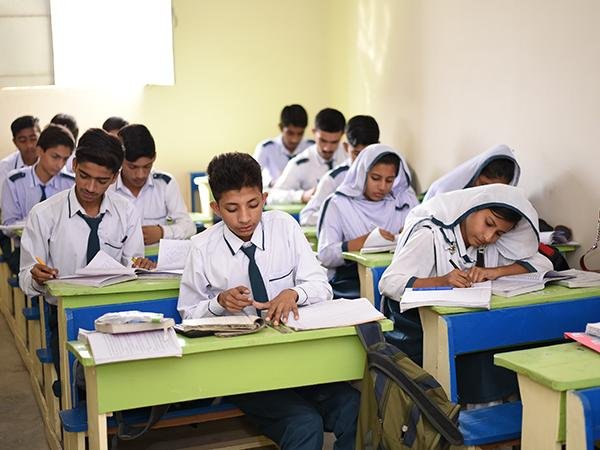
In many classrooms, students are expected to memorize definitions, reproduce textbook answers, and prepare for examinations rather than explore ideas, ask questions, or apply their knowledge to real-life situations.
Memorization can help students retain essential information, but it becomes a problem when it replaces understanding, reasoning, and practical learning.
A modern curriculum should encourage students to:
• Think critically and analyze information.
• Solve problems independently and collaboratively.
• Develop communication and digital literacy skills.
• Apply classroom knowledge to everyday situations.
• Explore science, technology, creativity, and innovation.
Curriculum reform in Pakistan must focus not only on what is taught but also on how students learn.
The Legacy of the Colonial Education System
Pakistan inherited significant elements of its formal education structure from British colonial rule. Historically, colonial education systems often emphasized administrative needs, standardized instruction, and particular forms of academic achievement.
However, Pakistan’s educational challenges cannot be explained by colonial history alone. Policy decisions, inconsistent implementation, resource constraints, teacher preparation, and differences between educational institutions have also influenced how the system has developed.
The challenge today is to build an education system that reflects Pakistan’s cultural and linguistic diversity while preparing students for modern economic and social realities.
This requires reviewing inherited structures critically, retaining approaches that remain valuable, and replacing ineffective practices with evidence-based educational methods.
Rote Learning Versus Critical Thinking
Rote learning remains a concern in classrooms where examination performance is prioritized over deeper understanding.
Students may memorize an entire chapter and reproduce it accurately without fully understanding the concepts. This approach can help with short-term recall, but it does not always prepare learners to apply their knowledge in unfamiliar situations.
For example, a student might memorize a scientific formula yet struggle to use it to solve a practical problem. Similarly, a student may learn grammatical rules without developing confidence in writing or communication.
A stronger learning model combines subject knowledge with discussion, experimentation, project-based activities, and real-world problem-solving.
Teachers should be encouraged to ask questions that invite students to explain their reasoning, explore different solutions, and learn from mistakes.
The goal of education should be understanding, not memorization alone.
What Does an Outdated Curriculum Cost Pakistan?
The consequences of an outdated or poorly implemented curriculum can extend far beyond the classroom.
Limited employment opportunities
Employers increasingly value communication, analytical thinking, digital skills, adaptability, and teamwork. Students who receive limited opportunities to develop these abilities may find it harder to transition from education into employment.
Reduced innovation
Innovation depends on curiosity, experimentation, and the ability to question existing ideas. Learning environments that discourage questions can limit opportunities for students to develop these qualities.
Unequal educational opportunities
Pakistan’s students do not all experience the same educational conditions. Differences in school resources, teacher training, language of instruction, technology access, and curriculum implementation can create unequal opportunities.
Students in underserved communities may face additional barriers to accessing quality education and developing modern skills.
A widening digital divide
Technology is changing how people work, communicate, and access information. Without suitable digital literacy and technology education, some students risk being left behind as digital skills become increasingly important.
These challenges affect not only individual learners but also Pakistan’s long-term economic and social development.
Why Curriculum Reform in Pakistan Is Necessary
Curriculum reform is about more than replacing old textbooks with new ones. It requires a comprehensive approach to teaching, assessment, teacher development, and educational access.
A meaningful reform strategy should include the following priorities.
Update learning materials regularly
Textbooks and learning resources should reflect current scientific knowledge, technological developments, social realities, and age-appropriate educational standards.
Curriculum reviews should be evidence-based, transparent, and responsive to the changing needs of students.
Introduce practical and skills-based learning
Students need opportunities to apply concepts through experiments, projects, presentations, research, and collaborative activities.
Practical learning helps connect theoretical knowledge with real-life challenges.
Strengthen teacher training
Even a well-designed curriculum cannot succeed without properly supported teachers.
Professional development should help teachers use interactive teaching methods, assess student understanding, integrate technology, and support children with different learning needs.
Improve assessment methods
Examinations have an important role in measuring academic progress, but assessment should not depend exclusively on memorized answers.
A balanced system can include problem-solving tasks, projects, presentations, classroom participation, and assessments that measure conceptual understanding.
Make education more inclusive
Educational reform must consider children from different socioeconomic backgrounds, rural and urban communities, and diverse linguistic environments.
Quality education should not depend solely on a child’s location or family income.
Preparing Pakistani Students for the Future
Modernizing Pakistan’s curriculum also means preparing students for careers and challenges that may not yet exist.
Artificial intelligence, automation, environmental change, digital communication, and emerging industries are transforming the skills required across many professions.
Students need strong foundations in literacy, mathematics, science, and social studies. They also need opportunities to develop creativity, collaboration, financial awareness, digital responsibility, and lifelong learning habits.
Technology can support this transformation, but it should complement rather than replace effective teaching and meaningful human interaction.
Most importantly, educational modernization should preserve the value of Pakistan’s languages, history, cultural heritage, and ethical learning while equipping students to participate confidently in a connected world.
The Role of Organizations Like Taleem Foundation
Government policy plays a central role in curriculum development, but improving educational outcomes also requires collaboration among schools, teachers, families, communities, and educational organizations.
Organizations such as Taleem Foundation can contribute by supporting educational access, encouraging community participation, promoting teacher development, and helping identify the learning needs of underserved students.
Meaningful progress can begin with practical initiatives such as:
• Supporting children who face barriers to quality education.
• Encouraging reading, reasoning, and problem-solving.
• Promoting teacher training and innovative classroom practices.
• Raising awareness about the importance of modern educational skills.
• Supporting learning environments where students feel encouraged to ask questions and explore ideas.
Lasting change requires sustained effort, thoughtful planning, and a commitment to measuring what genuinely improves student learning.
Building a Better Education System: What Needs to Change?
Pakistan needs an education system that balances academic foundations with practical knowledge, critical thinking, creativity, and character development.
Reform should be guided by clear educational goals, meaningful consultation with teachers and communities, reliable evidence, and consistent implementation.
It should also recognize that curriculum changes alone cannot resolve every educational challenge. School infrastructure, teacher availability, funding, language barriers, poverty, and student attendance must be addressed alongside curriculum development.
Progress should be measured by whether children understand what they learn, develop useful skills, continue their education, and gain greater opportunities to participate in society.
The future of Pakistan depends partly on how effectively the country invests in its youngest generation.
Conclusion: The Time to Rethink Education Is Now
Pakistan’s curriculum challenges are not simply about old textbooks. They concern the broader purpose of education and whether schools are equipping children with the knowledge and skills needed to succeed in a changing world.
Moving beyond excessive rote learning, improving teacher preparation, modernizing learning materials, and expanding access to quality education can help create a stronger foundation for future generations.
Reform will take time, resources, collaboration, and consistent implementation. However, delaying meaningful improvements can leave more students without the opportunities they deserve.
At Taleem Foundation, we believe every child deserves the chance to learn, grow, think independently, and build a better future.
Because when we improve education, we invest in children, strengthen communities, and help shape the future of Pakistan.
Call to Action
Join Taleem Foundation in supporting a future where every child has access to meaningful, inclusive, and quality education.
Together, we can help create learning opportunities that prepare the next generation not only to pass examinations but also to solve problems, innovate, and lead.
Taleem Foundation — Empowering Minds, Transforming Futures.