Education is the cornerstone of national development, and the curriculum plays a pivotal role in shaping students’ knowledge, skills, and values. In Pakistan, curriculum reform has been a topic of extensive debate, aiming to modernize the educational system, promote critical thinking, and address contemporary societal needs.
Why Curriculum Reform Matters
A well-structured curriculum ensures that students are not only academically competent but also socially responsible and prepared for the challenges of the 21st century. Key reasons why reform is essential include:
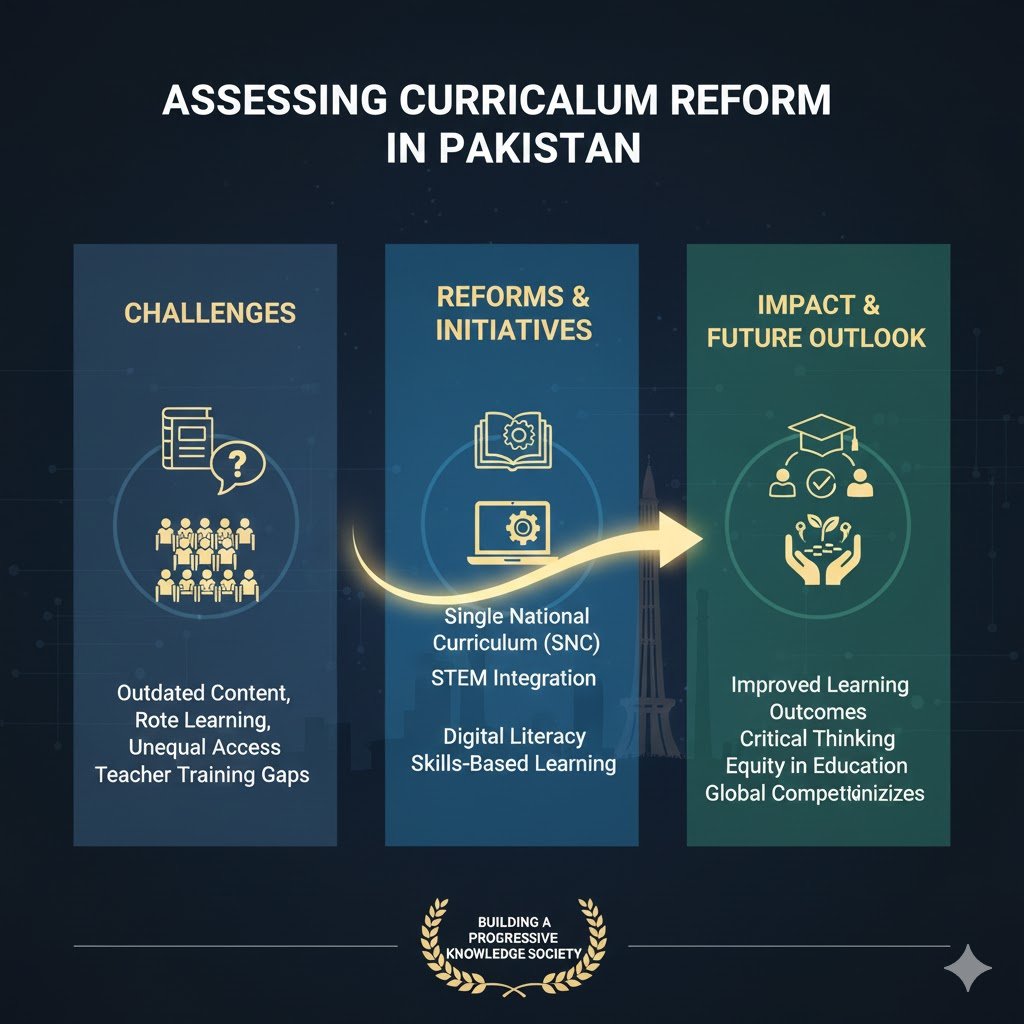
- Alignment with Global Standards: Modern curricula incorporate international best practices, making Pakistani students globally competitive.
- Skill Development: Emphasis on critical thinking, problem-solving, and creativity rather than rote memorization.
- Inclusivity: Ensures representation of diverse cultures, languages, and perspectives within the country.
- Technological Integration: Prepares students for a digital world, incorporating STEM education and digital literacy.
Challenges in Pakistan’s Educational System
Despite efforts, several challenges persist:
- Outdated content: Many textbooks still focus on memorization rather than practical application.
- Teacher training gaps: Educators often lack adequate training to implement modern curricula effectively.
- Resource constraints: Schools in rural areas struggle with limited materials and infrastructure.
- Resistance to change: Cultural and institutional inertia can slow down reform efforts.
Key Areas of Curriculum Reform
1. Integrating Critical Thinking and Creativity
Reforms aim to move beyond rote learning, encouraging students to analyze, question, and innovate.
2. STEM and Digital Literacy
Introducing science, technology, engineering, and mathematics early on equips students for modern careers and global opportunities.
3. Inclusive and Multicultural Education
Curricula now emphasize diversity, human rights, and social cohesion, reflecting Pakistan’s multi-ethnic society.
4. Continuous Assessment Methods
Replacing traditional examinations with project-based assessments, presentations, and practical work to better evaluate understanding and skills.
The Role of Government and Institutions
Curriculum reform requires a coordinated effort among government bodies, educational institutions, and stakeholders:
- Policy-making: National education policies should provide clear frameworks for reform.
- Teacher training: Ongoing professional development ensures teachers can implement changes effectively.
- Monitoring and evaluation: Regular assessment of curriculum outcomes ensures relevance and quality.
Conclusion
Curriculum reform is not just about changing textbooks, but about creating an educational ecosystem that fosters innovation, inclusivity, and critical thinking. For Pakistan to realize its full potential, continuous efforts are needed to modernize curricula, equip teachers, and provide resources that support holistic student development.
Education reforms, when implemented thoughtfully, can transform Pakistan’s youth into capable, responsible, and globally competitive citizens.