Artificial Intelligence (AI) is becoming an increasingly important part of education around the world, and Pakistan is beginning to explore how these technologies can support students, teachers, and schools.
From AI education in Pakistan to smart classrooms, digital learning platforms, and AI-powered tutoring, technology is creating new possibilities for improving access to quality education.
For organizations working to expand educational opportunities, including Taleem Foundation, understanding these developments is important for preparing students for a rapidly changing future.
The Growing Role of AI in Pakistani Education
Pakistan has been taking steps to introduce artificial intelligence into its education and skills-development systems.
In February 2026, the government announced plans for a $1 billion investment in the country’s AI sector by 2030. The announcement also included plans to introduce AI curriculum in federally run schools, provide 1,000 fully funded AI PhD scholarships by 2030, and train one million non-IT professionals in AI skills.
These initiatives demonstrate a growing focus on preparing students and workers for an increasingly digital economy.
AI Education in Pakistan’s Schools
AI education is increasingly being considered at the school level rather than only at universities.
In September 2026, Punjab approved a new school curriculum that includes artificial intelligence from Classes 1 through 12, along with plans for AI labs and stronger digital literacy initiatives.
Pakistan’s National AI Policy also identifies the integration of AI and data science into education as a key objective, including introducing these subjects into basic education.
Early exposure can help students become familiar with concepts such as problem-solving, data, automation, algorithms, and responsible technology use.
Smart Classrooms and Digital Learning
Technology-enabled classrooms are another important part of Pakistan’s education transformation.
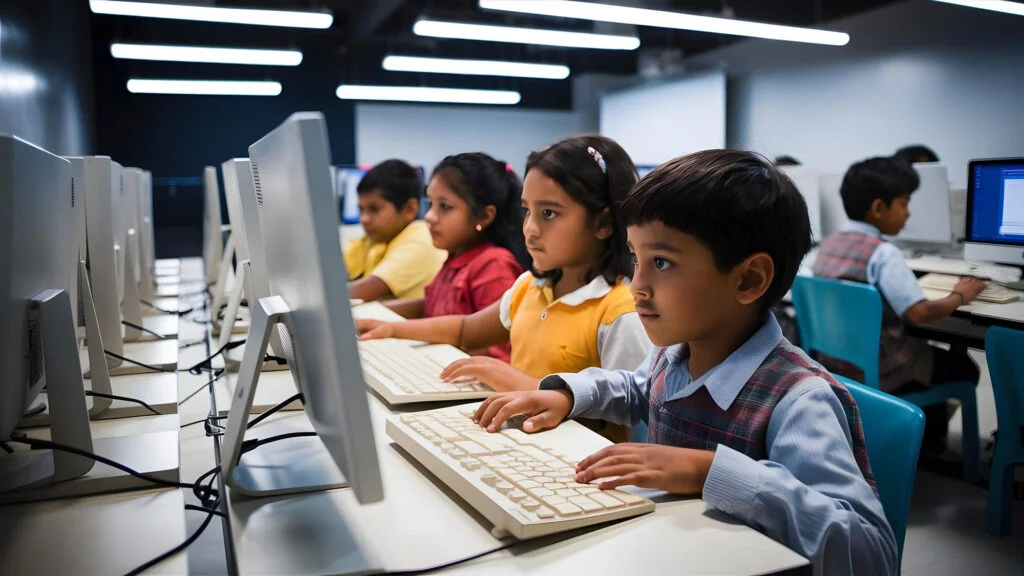
The Ministry of Federal Education and Professional Training reports that 400 smart classrooms have been established across ICT, AJK, and Gilgit-Baltistan. These classrooms use smart screens, computers, speakers, and digital learning resources. The government’s eTaleem system also provides learning-management and teacher-training capabilities.
Smart classrooms can give students access to digital educational resources that may not always be available through traditional classroom materials.
AI Tutoring and Personalized Learning
One of the most interesting possibilities of AI in education is personalized learning.
Traditional classrooms often require one teacher to support many students at the same time. AI-powered learning tools can potentially provide additional explanations, practice activities, feedback, and learning support based on individual needs.
Pakistan is also beginning to experiment with AI-powered tutoring. In September 2026, the University of South Asia launched the MAYA AI Tutor nationally for higher education, describing it as a curriculum-aligned system focused on personalized learning, learning analytics, and institutionally governed AI use.
At the school level, Khyber Pakhtunkhwa launched a public-sector Global Virtual School initiative in August 2026 designed to provide virtual AI-supported education to students, including those in remote areas.
AI Can Support Teachers Too
AI isn’t only about helping students.
Teachers can potentially use AI tools for lesson planning, generating practice materials, organizing content, and identifying areas where students may need additional support.
A 2025 study of educators in Pakistani K-12 schools found that many teachers were already using AI for tasks such as lesson planning and content creation, while also identifying challenges related to training and equitable access.
This highlights an important point: technology works best when teachers are supported rather than replaced.
Preparing Students for the Future
As AI becomes part of more industries, students will need more than traditional academic knowledge. They will increasingly benefit from digital literacy, critical thinking, creativity, problem-solving, and an understanding of how technology should be used responsibly.
Pakistan’s Higher Education Commission announced in 2026 that a three-credit-hour AI course would be mandatory across undergraduate programmes, giving students from different academic disciplines foundational AI knowledge.
This approach can help make AI literacy relevant beyond computer science and technology degrees.
Challenges of AI in Education
The growth of AI also comes with challenges.
Schools need reliable technology, internet connectivity, trained teachers, appropriate digital resources, and clear guidelines for responsible AI use. Students also need to understand that AI-generated information should be checked rather than accepted automatically.
Equitable access is particularly important. Technology should help reduce educational gaps—not create new ones between students who have access to modern tools and those who do not.
The Future of Education in Pakistan
Artificial intelligence is not a replacement for teachers, classrooms, or human connection. Instead, it can become another tool for supporting learning when implemented thoughtfully.
For educational organizations such as Taleem Foundation, the growing role of technology creates opportunities to explore innovative ways of reaching students, supporting teachers, and expanding access to quality educational resources.
The future of AI education in Pakistan will depend not only on technology, but also on teachers, students, schools, communities, and organizations working together.
Building a Future-Ready Generation
Education has always been about preparing young people for the future. As Pakistan moves toward greater use of artificial intelligence, giving students access to digital skills and meaningful learning opportunities can help them participate in an increasingly technology-driven world.
Taleem Foundation believes that education can open doors—and technology can help us open even more of them.