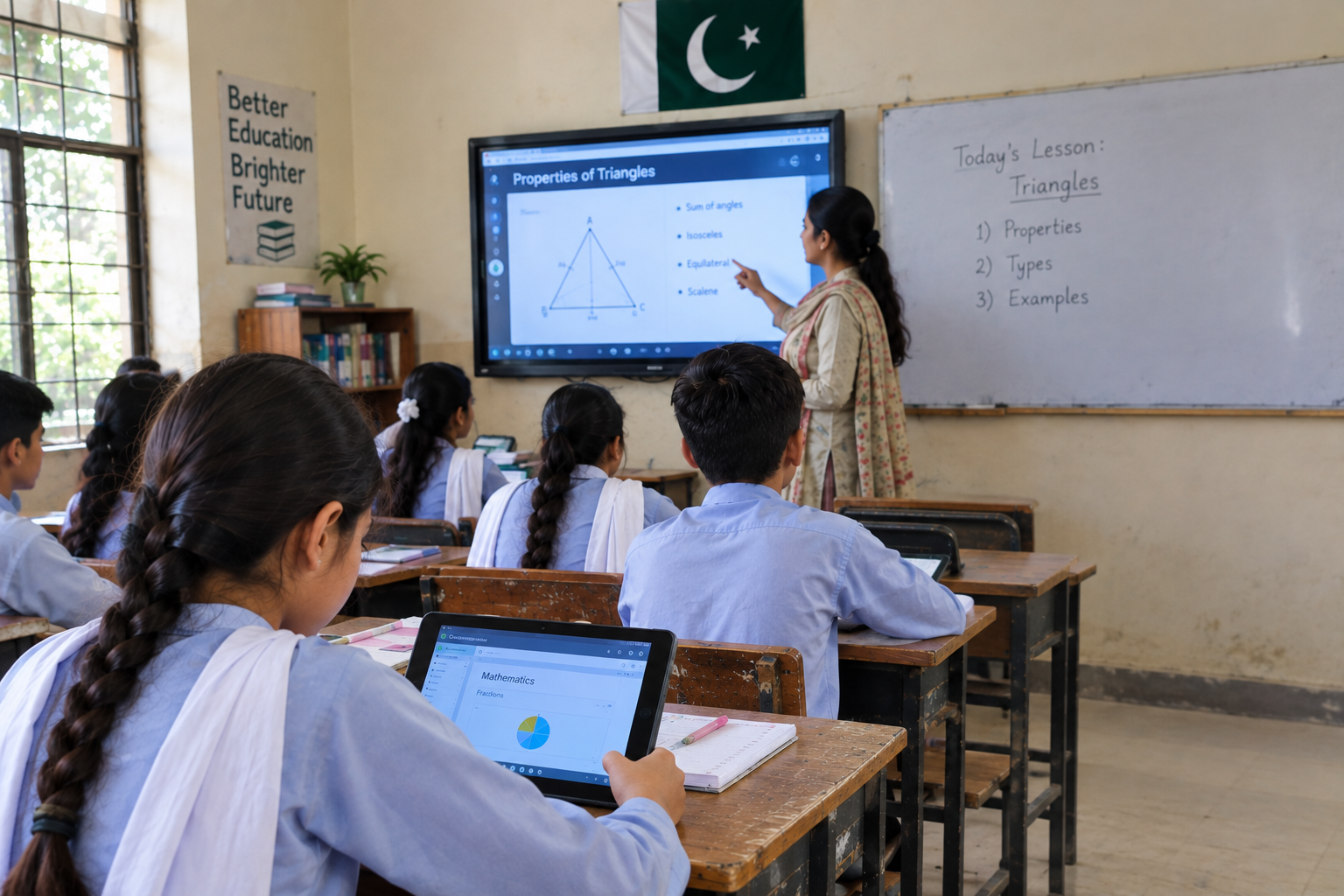
The whole view of education in Pakistan is changing as technological advancements present innovative methods of teaching and learning. Conventional classrooms are still useful but technologies allow teachers to deliver their message and lecture more efficiently and give students extra practice sessions as well as reach out to those who cannot attend class in the classroom. This trend in the world of education goes with educational technology, also known as EdTech and provides a way of making education interactive and more convenient for all students despite their background.
It offers a great approach for a country that has many problems about the access and quality of education. There are very few platforms offering different solutions, from animations and lessons to assessment and classroom management. Below you can find five EdTech platforms changing education in Pakistan.
1.Taleemabad: Bringing Interactivity into Learning
Besides depending on book knowledge, teachers can use online classes to make learning interesting and develop the basic reading and math skills of students.
In addition, Taleemabad puts emphasis on the possibility of accessing its services from any device. This aspect is especially important, knowing that many people have difficulties with getting expensive technologies.
In Pakistani schools, Taleemabad shows how technology can be used to complement the process of teaching. When teachers combine using digital materials with discussing the topics and practicing, students get more chances to have the understanding of the topic better.
2.Sabaq.pk: Bringing Free Education Into Reality
Sabaq is a very useful online learning website that is beneficial for all students who want to get some extra information in their subjects. There is a wide variety of free video classes and test exercises on different subjects in Pakistani boards of education.
Flexibility is one of its key benefits. Students can watch recorded lectures anytime they want to get further clarification, giving them the opportunity to study at their own pace without relying solely on class instructions.
This particular feature is particularly useful when preparing for exams. A student who finds mathematics and science difficult can go through the lecture, practice the questions, and then have a clearer understanding of the subject before taking the test.
The Android app by Sabaq also provides downloadables, which means that students have access to already downloaded material even in the absence of an internet connection.
In addition to offering educational resources without requiring students to pay for any learning content, Sabaq.pk also removes some financial obstacles to secondary education.
3.Knowledge Platform: Digital Classrooms
Knowledge Platform is yet another significant player in Pakistan’s EdTech ecosystem, as it creates digital solutions for learning that are meant to help students, teachers and educational institutions in their education through technology-enabled instruction.
Learn Smart Pakistan and other educational solutions from the Knowledge Platform, which show how digital content and assessment can be incorporated in structured learning environments. The organization has also been involved in some initiatives focused on expanding the reach of school level educational content via television and digital channels.
Digital classroom resources will enable the teacher to deliver lectures in multiple ways, review key concepts and also identify areas where students require additional assistance. Assessments and learning activities will also give some information on student learning.
The above mentioned tools will provide schools with the opportunity to improve their instructional processes without completely altering the teaching process that they follow.
Knowledge Platform makes a very important point in its philosophy of education technology: the fact that digital resources are best utilized in solving practical problems in classrooms. Technology must be such that it makes the teaching process easier and also gives a meaningful learning experience to the teacher and the educator.
4.Ilmversity: Connecting Teachers, Students and Parents
Education goes beyond the lessons and tests conducted in classrooms. Parents should know how their kids perform, and teachers and administrators will also need to coordinate academic activities and communication.
To facilitate this, Ilmversity offers a cloud-based school management system that helps to connect students, parents, teachers, and educational institutions via web and mobile apps. These systems help to keep track of academic progress, conduct administrative processes, and communicate with families.
This link can be useful in terms of tracking students’ progress. The information provided by schools and teachers regarding academic performance and other aspects of the educational process can help parents to support their kids better at home.
Teachers and school administrators will also be able to benefit from such software as they can organize data and keep track of the progress of their students.
Therefore, for Pakistani schools willing to develop communication and administration, platforms like Ilmversity show how EdTech can be used to deliver lessons and improve the process of communication.
5.Taaleem Online: Enabling Personalized Education
Taaleem Online is an online service provider that provides online classes, test preparation and assessment as well as learner monitoring. This platform enables learners to access education online with a systematic approach to learning.
Personalized tutoring could prove helpful for those students who have some doubts or find it difficult to grasp the topics taught in classroom settings. Learners would be able to ask questions and clarify their doubts through online tutoring.
Online practice questions and assessments could also enable learners to identify their strong and weak areas in advance of examinations.
While for families juggling between schooling and traveling among other things, online education could prove helpful, its success would depend on learners involvement and appropriate learning materials, as well as the availability of the Internet and gadgets.
This platform demonstrates how technology can be used outside the boundaries of classroom teaching to help students perform better academically.
Challenges and Opportunities for EdTech in Pakistan
However promising these applications may be, not everything can be resolved through technological advancements. Poor internet connection, high cost of devices and electricity, and various levels of digital knowledge among others, can hinder some learners from using these technologies efficiently.
It is also important to train teachers appropriately and ensure that digital material corresponds to the curriculum and requirements of their students.
Striking a balance is key here. Technological innovations have to enhance rather than substitute qualified teachers, classroom discussions, practical sessions, and personal interaction. Educational institutions should take into account the accessibility of platforms for students from marginalized communities.
Conclusion
EdTech brings numerous opportunities into Pakistani classrooms, providing education with greater access and adaptability. Taleemabad, Sabaq.pk, Knowledge Platform, Ilmversity, and Taaleem Online are examples of platforms that use technology in order to educate and assess learners.
Such factors are a reminder for organizations like the Taleem Foundation about the need to consider creative solutions which would enhance educational accessibility and quality. Future success in education in Pakistan would be defined by the way in which technology would be used to benefit the learners.
If digital technologies were to be complemented by quality teaching, family support, and an inclusive educational policy, classrooms of tomorrow could become accessible and beneficial for more students.